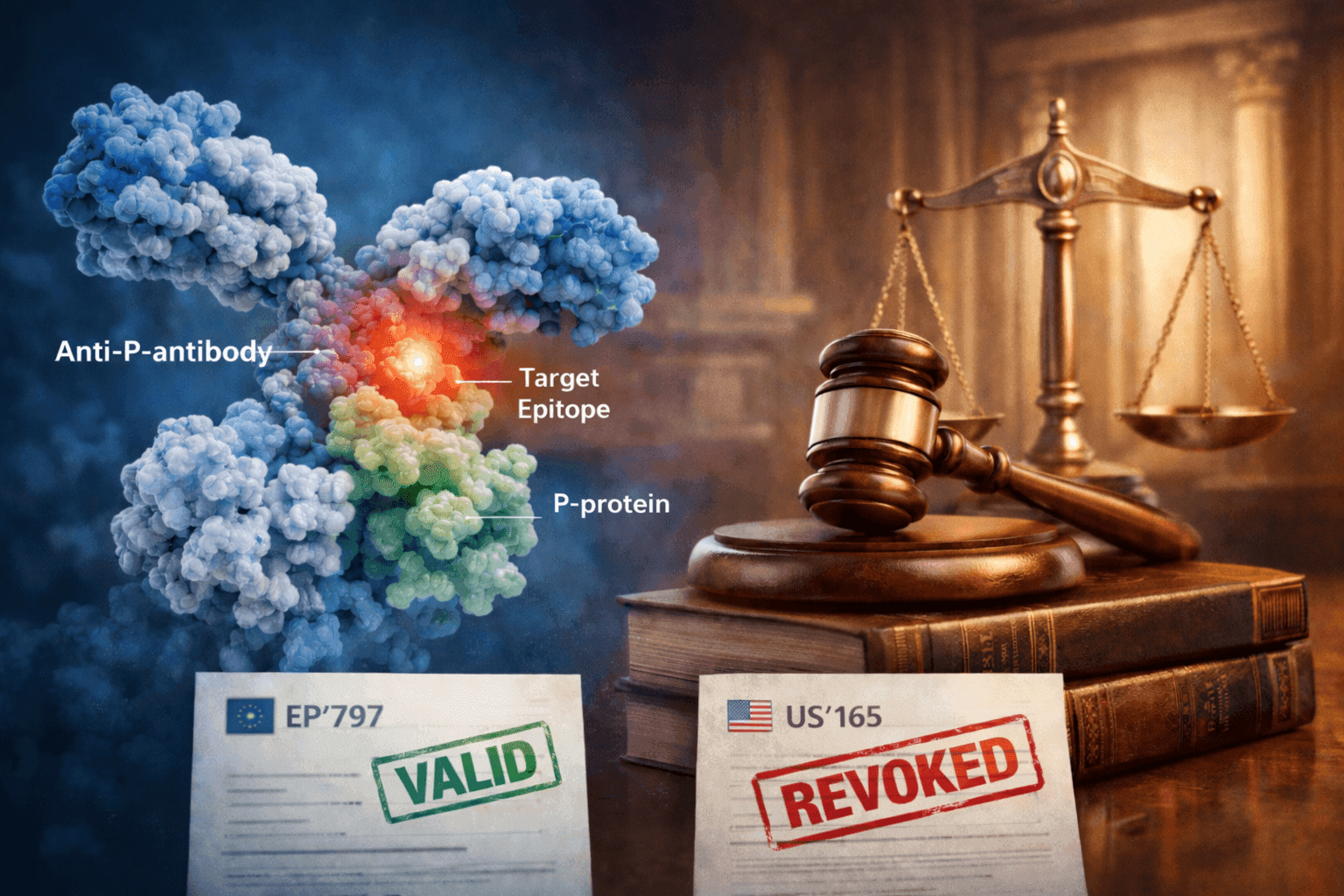
[Summary on the important decision of the UPC appeal court on functionally defined antibody claims]
Recently, in a game changing decision, the UPC Court of Appeal (UPC CoA) ruled for the validity of Amgen’s European patent EP3666797 (UPC_CoA_528/2024, UPC_CoA_529/2024). That patent relates to anti-PCSK9 monoclonal antibodies for use in treating or preventing hypercholesterolemia or an atherosclerotic disease
Previously, the patent was granted by the EPO on 17 May 2023 and has thus far been successfully defended under opposition by Regeneron and Sanofi. However, in parallel, the first instance of the UPC (the Munich Central Division) revoked the patent on the grounds that the generation of antibodies against a known epitope is a matter of routine so non-inventive. Meanwhile, the US Supreme Court in a decision dated 18 May 2023 revoked the corresponding US patent for lack of enablement.
However, things turned out differently, and in its latest decision, the UPC Appeals Chamber upheld the grant. This decision is very detailed and well worth reading; below, we summarize only the most critical points that are relevant to the granting of antibody patents in the future.
- Claim Interpretation
Now, in its decision, the UPC CoA highlights the importance of proper claim interpretation and the particulars of a second-medical-use claim format.
The antibody in the main second medical use claim was defined not by the CDRs *(*complementarity-determining regions) of antibodies but by the epitope defined by its amino acid sequence. That claim reads as follows:
"A monoclonal antibody or an antigen-binding fragment thereof for use in treating or preventing hypercholesterolemia or an atherosclerotic disease related to elevated serum cholesterol levels; or for use in reducing the risk of a recurrent cardiovascular event related to elevated serum cholesterol levels; wherein the monoclonal antibody or the antigen-binding fragment thereof binds to the catalytic domain of a PCSK9 protein of the amino acid sequence of SEQ ID NO: 1, and prevents or reduces the binding of PCSK9 to LDLR."
This claim is drafted in a ‘medical use-format’ that inherently incorporates the ‘feature of a therapeutical effect’. According to the UPC CoA, the claimed treatment has to cause a noticeable improvement of the medical condition, i.e. the treatment must be meaningful.
- Sufficiency
Regarding the ongoing discussion on sufficiency, the UPC CoA aligned with EPO practice in considering also limited experimental data to be appropriate (“at least one way”) for the invention to be sufficiently disclosed. The skilled person should be enabled to reproduce the invention without any inventive effort and without undue burden. The non-availability of some embodiments is not detrimental, as occasional failure is part of scientific work. The burden of presentation and proof lies with the parties contesting a patent, making it more difficult to challenge such patents.
Thus, it seems confirmed that patentees are in a more favorable position in Europe with broad functionally defined antibody claims than in the U.S. with respect to sufficiency of disclosure, where structurally defined antibody claims have greater chances to succeed.
- Inventive step
Last but certainly not least, the UPC CoA confirmed and formulated in detail, while assessing inventive step, the principles that are likely to be applied routinely in future decisions. As a relief and not surprisingly, the UPC confirmed that the problem-solution approach - treated as almost mandatory by the EPO - is not the only way to assess inventive step. This acknowledges different national approaches which, when properly applied, desirably lead to the same or similar conclusion.
In this decision, the UPC CoA applied a more holistic approach. This follows by first identifying the object of the invention, that is, the objective problem addressed by the invention at the relevant date. The court emphasized that this must be done by establishing what the invention adds to the state of the art, not by looking at the individual features of the claim. Practically, that assessment is performed by comparing the claim as a whole in light of the description to the state of the art and considering the general inventive concept. Comparison to a realistic starting point in the state of the art (in contrast to the closest prior art) is considered. Finally, an approach similar to the EPO’s “Could/Would” approach was endorsed and applied.
In this context, for a finding of obviousness, the solution must have been clearly predictable, or such that there was a reasonable expectation of success. In this analysis, the burden of proof lies on the party asserting the patent’s invalidity. This may increase efforts for parties challenging a patent and appears to be beneficial for patentees.
The UPC CoA thus came to the same conclusion as the Opposition Division of the EPO but via a different approach. An appeal is still pending, so it remains to be seen whether the EPO Board of Appeal will uphold that decision and fall in line with the UPC CoA..
Takeaways for EP prosecution and relief to Patentees:
- In Europe broad claims for functionally defined antibodies are considered sufficiently disclosed, if supported by appropriate experimental data.
- While the problem-solution approach is mandatory in EPO prosecution, it is not harmful for the more holistic and case-specific approach applied at court.
- Greater emphasis is now placed on “Would” rather than on “Could” in the “Could/Would” approach.
- Any suggested ‘reasonable expectation of success’ must be substantiated by the party challenging the patent.


- June 23, 2026
 May 8, 2026
Plants made with NGT (new genomic technologies)
 April 17, 2026
Fleuchaus & Gallo expands – and intends to continue doing so!
Fleuchaus & Gallo expands - welcome Samuel Wu and Christoph Wagner!

The Greenland Shark and the Interpretation of Declarations of Intent
Ecosystems do not adhere to the artificial boundaries between countries that we have created. Rather, they extend beyond national borders.
- March 27, 2026
 March 19, 2026
A New Era for Computer-Implemented Inventions in Australia
Australia’s Federal Supreme Court (the ‘High Court of Australia’) dashed hopes for greater clarity in the patentability of computer-implemented inventions when, in 2022, it handed down a 3–3 split decision in _Aristocrat Technologies Australia Pty Ltd v Commissioner of Patents_ ([2022] HCA 29).
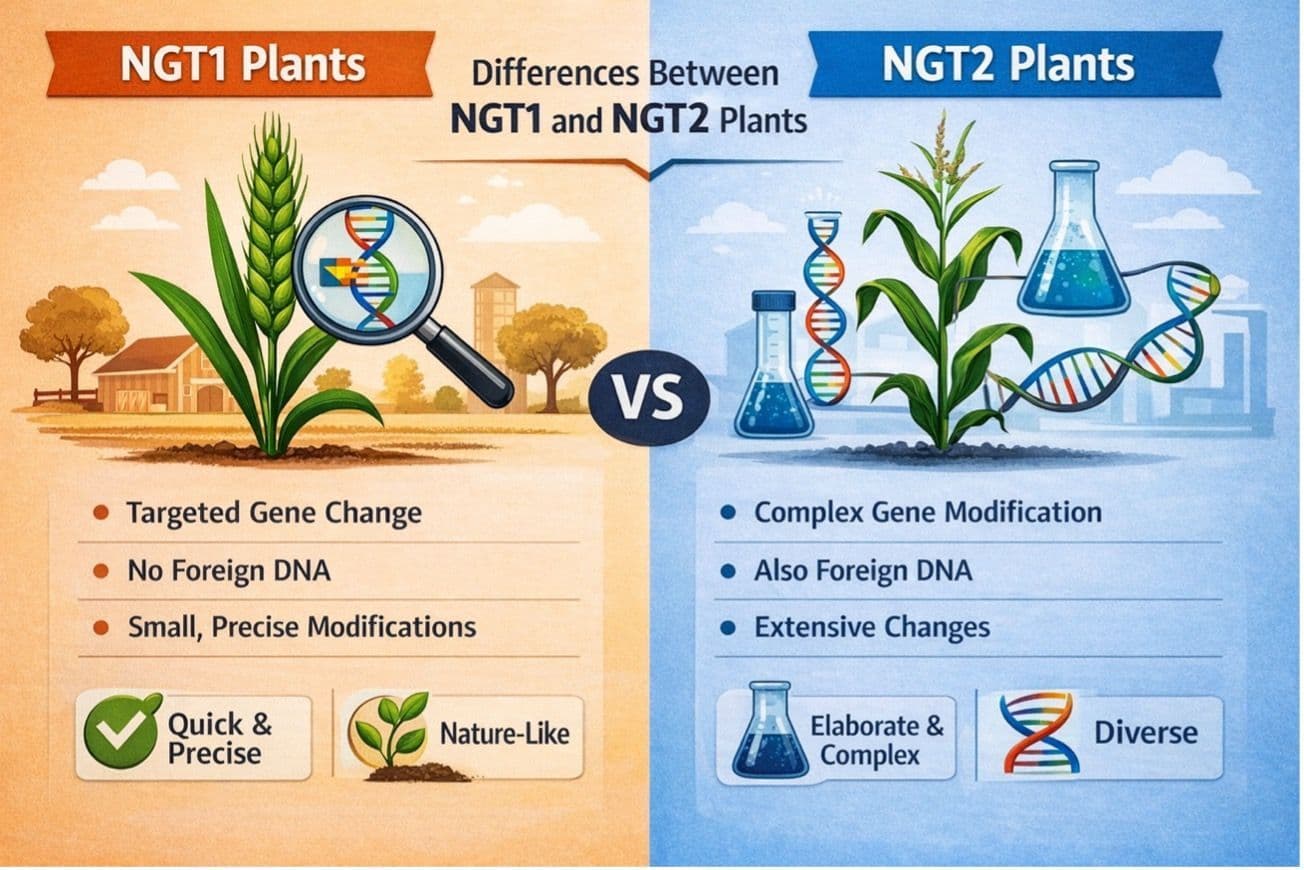
New legal framework for NGT (new genomic techniques) plants and easing concerns on the issue of their patentability
Just before the end of 2025, the EU Parliament and the EU Council reached an exciting agreement that should lead to a novel uniform legal framework for new genomic techniques (NGT).